The following text is an adaptation of a lecture presented at the BFE/RMA Research Students’ Conference 2026 - Royal Conservatory of Birmingham - 6th January 2026
introduction
Graciela Paraskevaídis was born in Buenos Aires, Argentina, in 1940. She studied composition at the National Conservatory of Music of Buenos Aires. From 1965 to 1967, she received a scholarship to study at the Latin American Centre for Advanced Musical Studies (claem) in Buenos Aires, and from 1968 to 1970, she continued her studies in Freiburg im Breisgau. She was a member of the organising committee of the Latin American Courses of Contemporary Music, which took place between 1971 and 1989. From 1975 until her death in 2017, she lived in Montevideo, Uruguay, where she did extensive work teaching and disseminating contemporary Latin American music.
During her time at CLAEM, Paraskevaídis recognised the importance of creating music from and for 'the South'. As a result, she began searching for elements that would differentiate her music from European and North American canonical structures.
with the aim of gaining a deeper understanding of this 'Latin American' music, we will analyse her piano music to identify the approaches and factors that define her aesthetic.
in this case, we will focus on three piano works by the composer
en Abril (1996)
contra la olvidación (1998)
dos piezas para piano (2001)
Through these pieces, we will present factors that can define a Latin American minimalism and its relationship with concepts common to the composer's aesthetic exploration, such as austerity, rituality and memory.
factors of differentiation
We will refer to musical elements that deviate from hegemonic models as 'factors of differentiation'. This is in response to the need to generate countermodels in the field of contemporary music, as Coirún Aharonián says:
the only way of being oneself for a man in a society depending on those metropolitan models, is to try to live the creative act in such a way that it can generate cultural countermodels (Aharonián, 2000)
On this occasion, we will explore five factors, present in the works of the composer:
Silence as a structural element
The reiterative in its ritual function
Economy of materials
Handling of time
Unpredictability in repetition
1. Silence as a structural element
The structure of Paraskevaídis's music takes sound itself as its starting point. Silence is no less important. It is conceived as part of the structure, rather than as a 'separation' between phrases, as in most Western models. This approach results in non-discursive, 'essential' music that exists beyond rhetoric.
the following quotes will help us understand how silence is conceived by some composers from Paraskevaídis’ generation:
silence is part of the sound structure, and the resulting minimalism opposes the U.S. minimalism of the sixties, in particular due to the sources that conceptually structure it: the observation of indigenous musical experience, silence, and dynamic fluctuation. (Paraskevaídis, 2009: 4)
is one of the most important conquests of the contemporary composer, who has gradually become less scared of the sound vacuum. (…) Silence ceases to be a negation to become an affirmation, that is a sound space loaded with expressiveness. (Aharonián, 2000)
Let’s see some examples of how the composer uses silence in the pieces of this text:
en abril

Image 1 - Paraskevaídis, g. en abril (1996)

Image 2 - paraskevaídis, G. en abril (1996)
In these examples, silences appear abruptly within a context of constant reiteration. This gives the work greater expressiveness, forcing the listener to maintain deep attention throughout the piece.
Dos piezas para piano – I. “preguntas inútiles para este invierno”
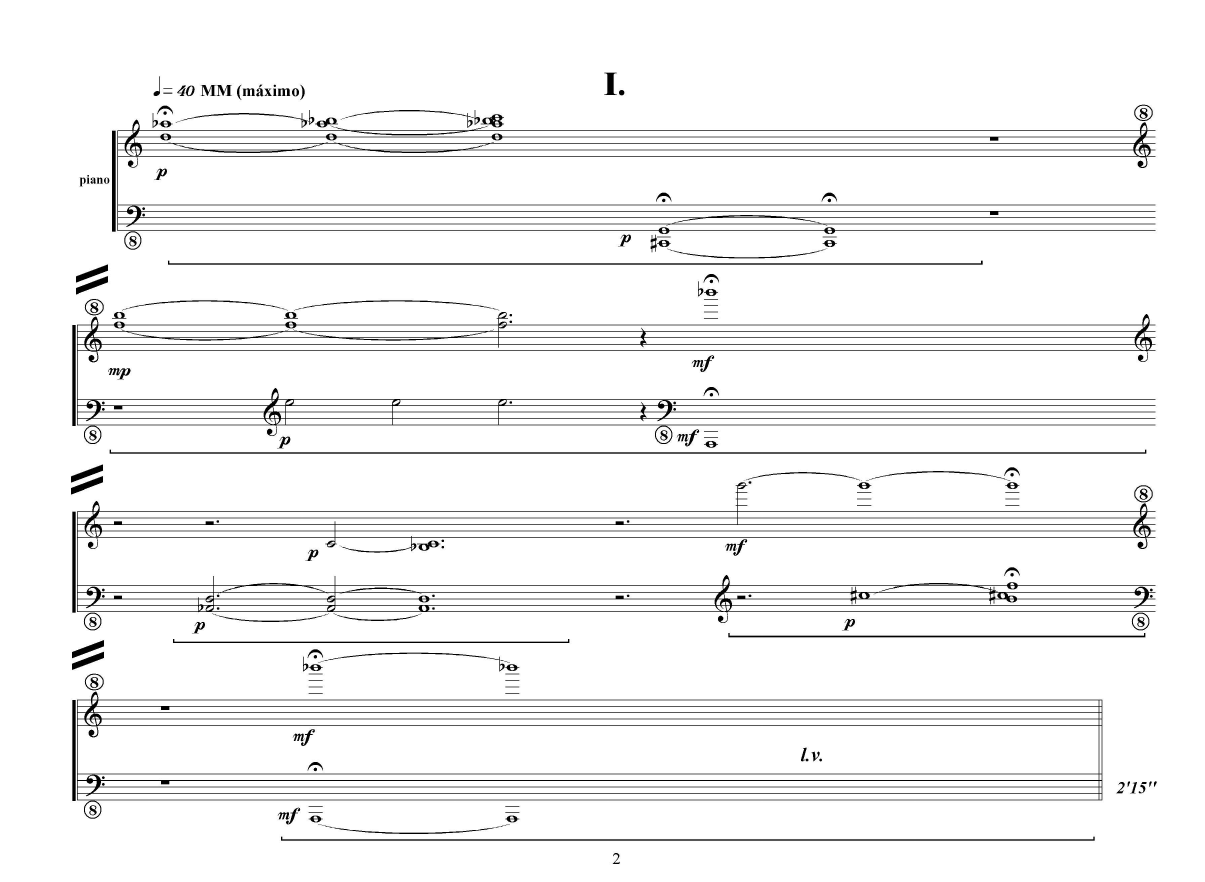
Image 3 - Paraskevaídis, g. dos piezas para piano (2001)
Here, the silences arise directly from the long resonances of the chords. It is important to consider the effect that these voids have on the listener, for whom expectation and even discomfort are unavoidable.
We will consider this factor in relation to the concept of memory. The silences in these works stem from resonance. The absence of sound creates enough space for reflection on the impact of sound on one’s consciousness; there is a void of sound, but not of meaning.
2. The reiterative in its ritual function
Mariano Etkin (1972) states that, among the new generation of composers,
one observes a deepening and rediscovery of the lost visceral and magical function of music (paraskevaídis, 2014a: 11).
This function centres on the role of communication and community within the environment, as found in some Indigenous American cultures. In this sense, it is important to highlight that
In the relationships of exchange created by the circulation of musical energy it is not humans who occupy a central place. (…) In this process of animating the cosmos (…) the Andeans seem to conceive of themselves as one more element in the vast network of living beings that circulate and are transformed by the energies of the universe. (Martínez, R., p. 214)
'Animating the cosmos' refers to a magical relationship with the environment, in which music acts as a link between worlds. The concept of 'the other' as an interlocutor through the musical phenomenon is also evident in repetition, such that listening becomes a participatory experience. This means that the internal structural transformations are unpredictable and focus the attention of both the listener and the performer. In other words, non-mechanical variations place the musical phenomenon at the centre.
Considering the ritual function of music as a means of communicating with the cosmos, these works become an appreciation of Andean worldviews, in which the environment (i.e. the listeners) also plays an active role in the musical process.
We can therefore relate this factor to the latin american concept of rituality, in which connection with the environment, land and others (people and worlds) occupies a central place.
The musical characteristics of reiteration in Paraskevaídis’s work will be examined in greater detail with examples in the final factor presented.
3. Economy of materials
According to Paraskevaídis, towards the mid-1970s, Latin American composers began to speak of 'poor' music. This music is not poor
in the sense of arte povera, but rather it is a response to the challenges of voluntary austerity, sobriety and economy of means within an aesthetic framework that operates with essential, non-rhetorical and non-discursive materials. It also includes reiterative elements that are used differently to historical U.S. minimalism. (paraskevaídis, 2014b: 2)
One expression of this austerity is reducing the materials used to a minimum, as seen in the following examples
en Abril
The entire piece uses six notes from the central octave (B–C♯–D–E–F–G). The rhythm remains consistent throughout, with eighth notes repeating in a nearly unchanging manner.
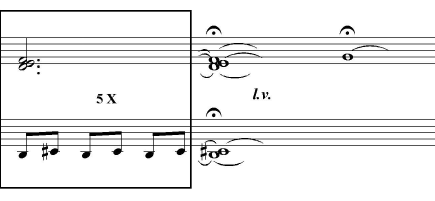
image 4 - paraskevaídis, g. en abril (1996)
contra la Olvidacion
There is a limited use of the highest register: during the first half of the piece, no sound falls below C5
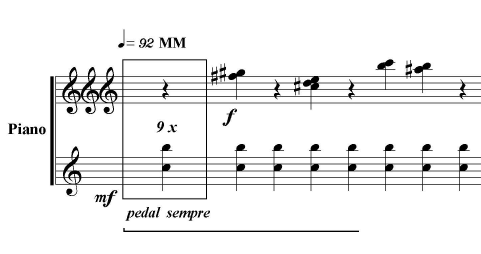
image 5 - paraskevaídis, g.
contra la olvidación (1998)
and during the second half, below A6. The register gradually reduces towards the high end of the instrument.
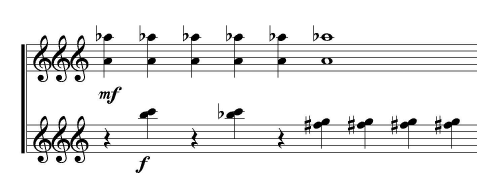
image 6 - paraskevaídis, g.
contra la olvidación (1998)
dos piezas para piano – second movement
Once again, register is used very selectively, this time in the lower register. All events occur within the first two octaves of the piano, except for the penultimate and antepenultimate chords.
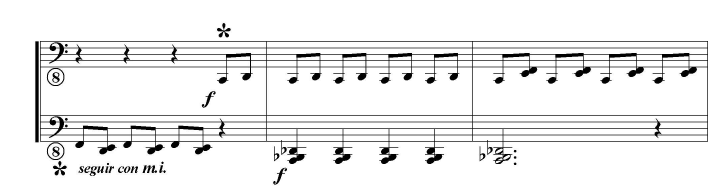
image 7 - paraskevaídis, g. dos piezas para piano ii (2001)
In these examples, we see that the composer has decided to limit the materials used to an extreme degree. This results in music of great expressive force, achieved through irregular repetitions and limited dynamic ranges, with an austere use of the available materials.
4. Handling of time
The psychological time of the Latin American composer is shorter and more concentrated than that of his average European colleague (Aharonián, 2000)
Through the repetition of short structures, staticity or rhythmic continuity, Paraskevaídis's handling of time in these works distances itself from habitual chronological temporality. According to the Aymara worldview, time is perceived as a space rather than a flow.
One of the components of ‘pacha’ is the cyclical periodicity of events that occur in the cosmos and in nature, from which two characteristic ideas of the Aymara perception/representation of what is predominantly called time originate: first, the circular/spiral concept of life; and second, the representation of the past before the human eyes and the future at their back, in clear differentiation from the Aristotelian idea of time as a flow that advances inexorably toward an illusory and conditional future. (Prudencio: 288)
We can therefore deduce that the way time is handled has its origins in a respectful homage to the worldview of the indigenous peoples of Latin America. In this case, it is linked to the concept of time.
En Abril
The entire piece consists of the continuous repetition of brief structures.
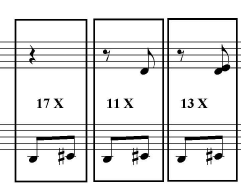
image 8 - paraskevaídis, g. en abril (1996)
Dos piezas para piano – I
The distance between each sonic event creates a stillness that 'stops' time.
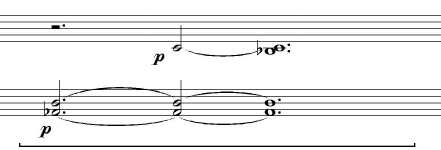
image 9 - paraskevaídis, g. dos piezas para piano i (2001)
Contra la olvidación
This temporal stopping occurs through constant reiteration (left hand)
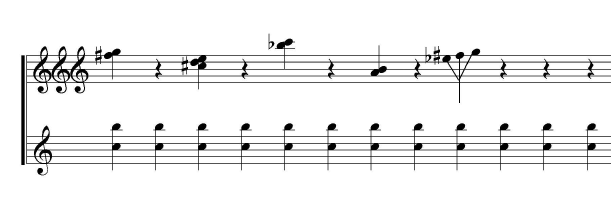
image 10 - paraskevaídis, g. contra la olvidación (1998)
In line with the Aymara perception of time, where the past is in front and the future behind, these works reinterpret the concept of memory, exploring how we engage with individual and collective memory and how it is reflected in music.
5. Unpredictability of repetition
The unpredictability of repetitions in Paraskevaídis’s music reflects the cyclical nature of time, as experienced by Indigenous peoples through their relationship with the land, their music and their worldview.
The repetition that affects different layers or groups, or their succession within each block, loses its predictability and moves away from the mechanical precisely due to the multidirectionality of its cyclical conception. (Paraskevaídis, 2011: 14)
In the selected works we can see the following elements that align with this factor
en abril
We find blocks of varying duration, oscillating between one and twelve beats. The variability in the duration of each block and the number of repetitions in each group (between one and 19) makes the reiteration unpredictable, forcing the listener to engage with it in a non-mechanical way.
dos piezas para piano – II
The continuous flow of eighth notes in the left-hand part indicates constant reiteration. The combination of the four sounds (C-D–E–F) is neither symmetrical nor predictable.
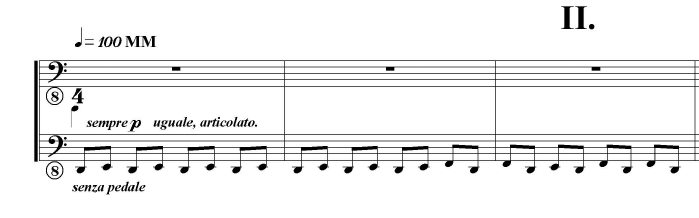
image 11 - paraskevaídis, g. dos piezas para piano ii (2001)
contra la olvidación
Elements that introduce randomness or unpredictability to the repetitive nature of the piece are found, such as
silences between right-hand attacks
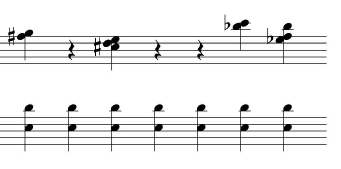
image 12 - paraskevaídis, g. contra la olvidación (1998)
sporadic stopping of the left hand
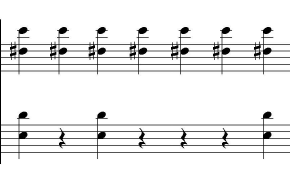
image 13 - paraskevaídis, g. contra la olvidación (1998)
or repetition of brief blocks.
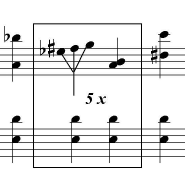
image 14 - paraskevaídis, g. contra la olvidación (1998)
This is also related to the ritual of listening, which prevents consciousness from distancing itself from the musical event. In this sense, ritual is not trance, but deep communication.
final words
To conclude, I would like to share one final quote from Paraskevaídis. Alongside the elements analysed in this lecture, these words demonstrate that the choices made in her creative work are firmly rooted in memory, defending and giving voice to a marginalised cultural identity.
Being aware of this history, which has not yet ended after more than 500 years, can help us understand the meaning of the absurd choice of composing music in Uruguay today. It can become a way to defend and rescue drowned, forgotten, despised symbols and their right to exist and be heard, a way to assume the need for a free existence, which can also be expressed through the challenge and risk of musical creation. (Paraskevaídis, 1996).
bibliography
Aharonián, C. (2000). An Approach to Compositional Trends in Latin America. Leonardo Music Journal, 10, 3-5. https://doi.org/10.1162/096112100570530
Martínez, R., & Aharonián, C. (n.d.). A propósito de las músicas indígenas andinas: Sonidos para animar el mundo. In La música y los pueblos indígenas — Coriún Aharonian (ed.) (pp. 199-216).
Paraskevaídis, G. (1996). magma. nueve composiciones. [CD booklet]. Montevideo, Uruguay: Tacuabé.
Paraskevaídis, G. (2009). Las venas sonoras de la otra américa. Author's edition.
Paraskevaídis, G. (2011). Imaginemos mundos. Cergio Prudencio, caminante altiplánico. Author's edition.
Paraskevaídis, G. (2014a). La presencia de compositores argentinos en los Cursos Latinoamericanos de Música Contemporánea. Author's edition.
Paraskevaídis, G. (2014b). La presencia de la música electroacústica en los Cursos Latinoamericanos de Música Contemporánea. Author's edition.
Prudencio, C. (n.d.). Desde dos entrañas. In La música y los pueblos indígenas — Coriún Aharonian (ed.) (pp. 281-290).
